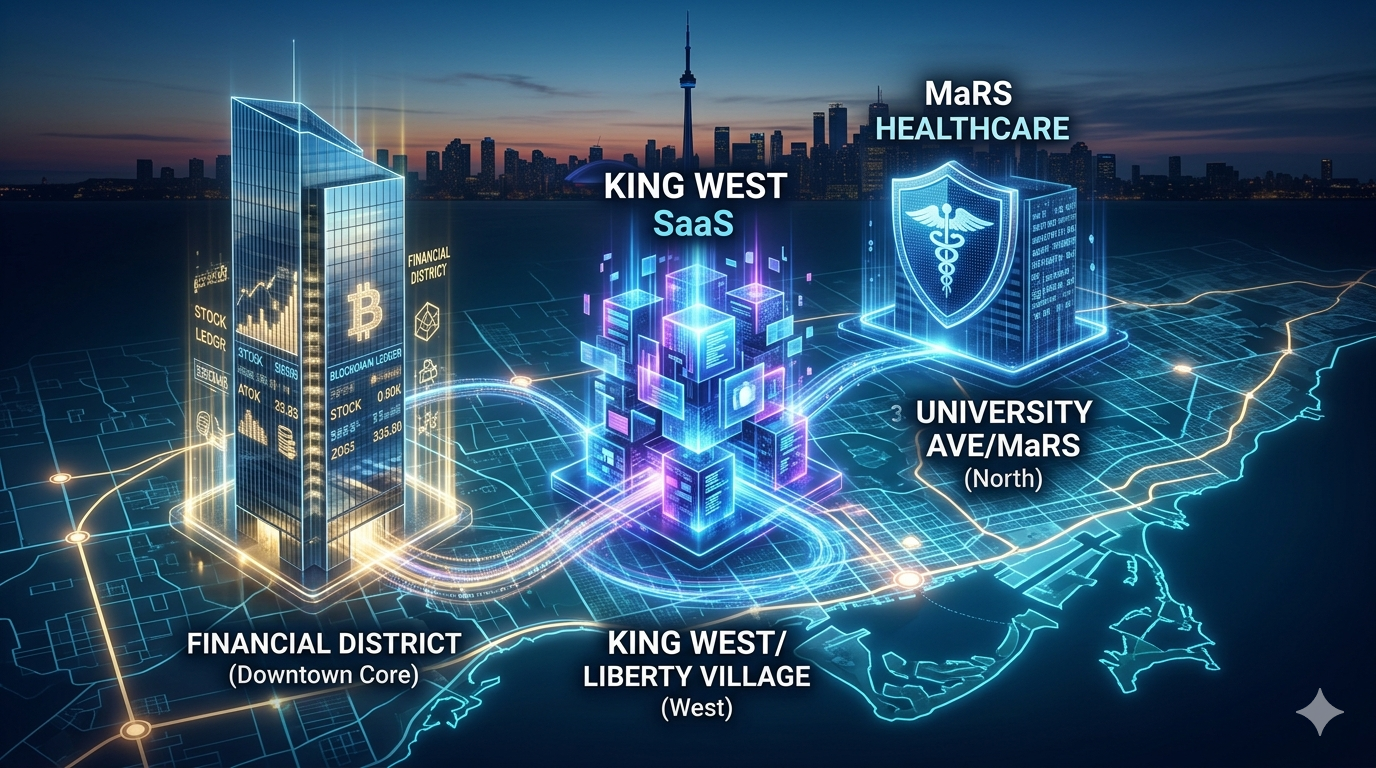

Welcome to our AI-native web design guide for 2026, where we define the technical standards for the next generation of digital infrastructure. For modern enterprises, a website is no longer a static digital brochure; it is a high-performance engine for growth, security, and industry-specific compliance.
Looking for our local web design services? View our full service offerings and portfolio here.
In this comprehensive 2,000-word blueprint, our technical architects explore the essential pillars of modern web development and why AI-native expertise is the only way to dominate your niche in 2026.
1. AI-Native Web Design Guide: Scaling SaaS in Tech Hubs
The 416 area code, specifically the King West and Liberty Village corridors, has officially surpassed Silicon Valley in terms of tech talent growth per capita. However, the “startup” aesthetic of 2020—minimalist, pastel-colored, and generic—is dead. Modern SaaS web development now focuses on “Agentic UX.” In 2026, users don’t want to navigate menus; they want to interact with AI agents that personalize the interface in real-time.
For a SaaS founder, the website is the product. If the frontend doesn’t reflect the sophistication of the backend AI, user churn will skyrocket. This is where technical software architects differentiate themselves from budget freelancers. We build “Inference-Ready” frontends that are optimized for the speed and latency requirements of LLM integrations as outlined in this AI-native web design guide.
Why Startups Consult Digital Infrastructure Architects:
- Inference Economics: Our developers understand the cost of AI tokens and how to optimize frontend calls to save startups thousands in monthly compute costs.
- The VC Factor: Venture capitalists now look for “Privacy-by-Design.” Having a site built by a team that understands Ontario’s data residency requirements is a massive competitive advantage.
- Scalability: A Liberty Village startup can go from 100 to 100,000 users overnight. Our architectures are built on headless frameworks that scale horizontally.
2. Enterprise Architecture: An AI-Native Web Design Guide for Finance

Visualizing the fusion of global finance with 2026 AI technology.
For firms in the Financial District, “award-winning design” is a baseline, but “operational resilience” is the requirement. As high-stakes financial web development specialists, we know that these firms are now tasked with building platforms that can handle the “Inference Era”—where data is processed and predicted instantly.
The standard for financial and legal institutions now includes Zero-Trust Architecture. Every contact form and client portal must be built on zero-trust principles to protect sensitive investor data. Following this AI-native web design guide, we implement multi-layered authentication and encrypted data-at-rest protocols for every professional service hub site we build.
Furthermore, Hyper-Personalization is the new key to conversion. Utilizing firmographic data to tailor the landing page experience for a C-suite executive versus a junior analyst is how top firms are winning. If your website can’t recognize visitor intent and serve relevant case studies, you are losing business to competitors who are already using an AI-native web design guide to implement these features.
3. The University Avenue Mandate: Healthcare and PHIPA Compliance
Perhaps no sector has evolved faster than Health-tech. With the surge of AI scribes and automated diagnostic tools, the demand for PHIPA & PIPEDA compliant healthcare engineering has reached an all-time high.
Clinics and medical labs near University Ave are dealing with the most sensitive data in the country. To achieve this level of technical sophistication, we often collaborate with specialized SaaS healthcare tool developers to ensure that backend data processing meets the highest security standards. In 2026, compliance is a living, breathing part of your web architecture.
The MaRS Discovery District Standard:
Our technical engineering team follows a three-tier security model for healthcare:
- Provincial & Federal Alignment: Ensuring every pixel meets both PHIPA (Ontario) and PIPEDA (Canada) standards.
- Human-in-the-Loop Safeguards: AI-generated clinical documentation must be presented in a way that allows for mandatory human oversight.
- AODA Accessibility: In 2026, AODA compliance is strictly enforced. We use automated auditing tools to ensure every patient can navigate your practice’s digital front door.
4. Why Entity Authority Validates this AI-native web design guide?
You may have noticed that generic agencies are losing their rankings while specialists are rising. This is because Google’s 2026 algorithm, fueled by Search Generative Experience (SGE), prioritizes Local Entity Authority. When a user searches for a “web designer near me” in Mississauga, Vaughan, or Markham, Google isn’t just looking for keywords; it’s looking for geographical relevance.
This is why we’ve specialized our city pages. The shift from broad keywords to “Entities” means that ranking for “SaaS web development Liberty Village” is far more valuable than ranking for generic terms. Our AI-native web design guide helps founders understand that high-intent projects require geographical and technical specificity.
5. Technical Excellence: Integrating the 2026 Tech Stack
Whether you are building a boutique e-commerce brand or a complex B2B portal, the underlying technology must be “Future-Proof.” When integrating the 2026 tech stack, this AI-native web design guide recommends focusing on headless architectures:
BigCommerce SEO and Scalability
For retailers in the GTA, BigCommerce remains the king of scalability. By following a specialized BigCommerce SEO guide, businesses can ensure their redirects and metadata are handled with the precision required to outrank national competitors. In 2026, BigCommerce’s multi-storefront capabilities allow brands to expand globally while maintaining a localized feel.
Enterprise-Grade WordPress
WordPress is still the most flexible CMS, provided it is managed by experts who know how to strip away “plugin bloat.” We build custom-coded, security-first backends that can handle the integration of custom AI models and high-volume traffic without performance degradation.
6. Data Sovereignty: An AI-native web design guide for Ontario Hosting
In 2026, where your data “lives” matters more than ever. Many businesses, especially in the legal and medical sectors, are now legally required to host their data on Canadian soil to stay compliant with provincial privacy laws.
As infrastructure consultants, we provide advice that keeps your data within Ontario’s borders. This reduces latency for your local users and satisfies the strict auditing requirements of Canadian financial and health regulators. This AI-native web design guide ensures your hosting environment is not just fast, but legally ironclad.
7. Predictive ROI: Integrating Analytics into your AI-native web design guide
The era of guessing which marketing channel works is over. In 2026, we integrate AI-native analytics that predict customer behavior before they even click. For a modern business, this means knowing exactly which neighborhood—be it Etobicoke, Scarborough, or North York—is driving the highest lifetime value customers.
By utilizing predictive modeling, our technical architects can help you shift your marketing budget dynamically. If data shows a surge in demand for professional services, your website can automatically prioritize related content and case studies to capture that momentum as suggested in our AI-native web design guide.
8. Conversion Rate Optimization (CRO) for Sophisticated Markets
Modern consumers are among the most sophisticated and time-crunched in the world. If your site doesn’t load in under 1.2 seconds, or if the user journey is confusing, they will bounce. We use AI-driven heatmaps to analyze user interactions, allowing us to place CTAs exactly where they generate the highest ROI. This AI-native web design guide prioritizes millisecond-level latency to ensure peak conversion rates.
9. Final Thoughts: Why Technical Expertise is Essential for 2026
In the 2026 economy, your website is your most valuable employee. It works 24/7, handles your compliance, generates your leads, and defines your brand in a sophisticated market. Joining the ranks of digital leaders requires a platform that doesn’t just survive but thrives.
If you are a firm in the Financial District, a healthcare provider on University Ave, or a startup in Liberty Village, the time for digital stagnation is over. Partnering with technical development experts ensures you stay ahead of the curve in an AI-driven, high-stakes market. As noted throughout this AI-native web design guide, your website is your most valuable employee.